
Can You Hydroseed on a Slope? Here's How It Works

Sloped areas can be challenging when it comes to establishing vegetation. Rainfall naturally moves downhill, which can lead to runoff, soil movement, and difficulty keeping seed in place. So, can you hydroseed on a slope? The answer is yes. Hydroseeding can be an effective way to establish vegetation on slopes, but the right approach depends on the conditions of the site and the level of erosion protection needed.
Why Are Slopes More Challenging?
Unlike flat areas, slopes are more vulnerable to runoff and erosion. When rain falls on exposed soil, water can move quickly downhill, carrying soil and seed with it. This can make it harder for vegetation to establish and may leave the slope vulnerable to further erosion. Proper site preparation and selecting the right application method are important parts of getting a strong result.
How Hydroseeding Works on a Slope
Hydroseeding applies a mixture of seed, mulch, fertilizer, water, and other materials evenly across the prepared soil surface. The mulch helps retain moisture around the seed and creates a protective layer that supports germination. On slopes, a tackifier can also be added to help the hydroseed mixture adhere to the soil, helping keep the seed and mulch in place when exposed to rainfall and runoff.
Hydroseeding can provide consistent coverage across large or difficult-to-access areas, making it a useful option for slopes where traditional seeding may be more challenging. However, the conditions of the slope still need to be considered to determine whether additional erosion control is necessary.

When Additional Erosion Control Is Needed
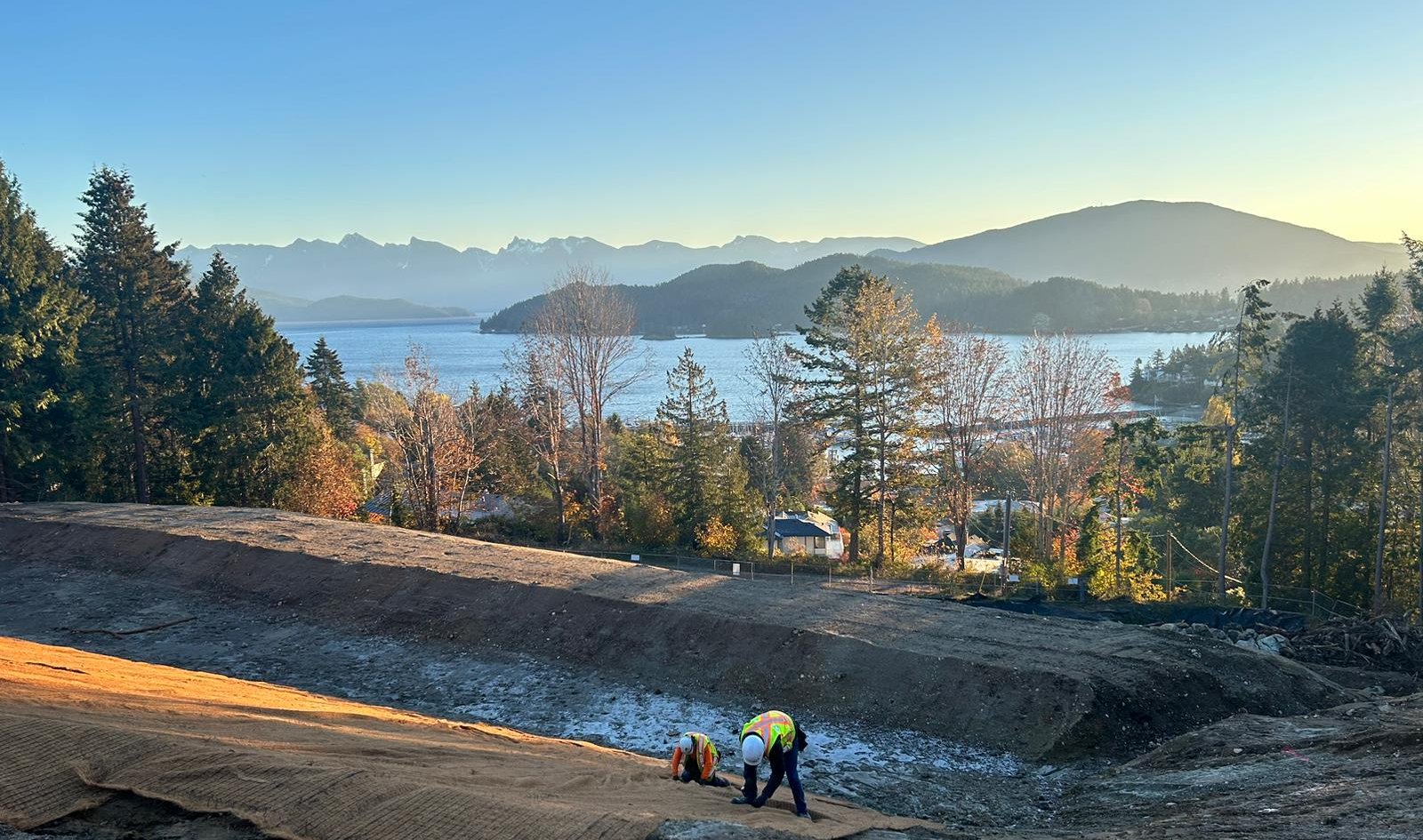
Some slopes require more protection than hydroseeding alone can provide. Steeper slopes, areas with significant runoff, or sites with a higher risk of erosion may benefit from erosion control blankets. These blankets, often referred to as seed germination or slit blankets, are installed over prepared soil and traditional dry seed. They provide physical protection that helps hold the seed and soil in place as vegetation develops.
Erosion control blankets and hydroseeding are different approaches and are not necessarily used together. Hydroseeding applies the seed and mulch mixture directly to the soil, while seed germination blankets are typically installed over traditionally seeded areas. Choosing between these methods depends on factors such as the slope, soil conditions, drainage, and overall erosion risk.
Choosing the Right Approach for the Site
Not every slope requires the same solution. The steepness of the slope, soil type, drainage patterns, expected rainfall, existing vegetation, and level of erosion risk can all influence which method is most appropriate. Some areas may be well suited for hydroseeding, while others may benefit from traditional seeding combined with an erosion control blanket or additional stabilization measures.
Looking at the site as a whole helps determine the most effective approach. Proper preparation and selecting the right method can improve vegetation establishment while helping manage erosion throughout the process.
Building a Stronger, More Stable Slope
Establishing vegetation on a slope is about more than simply getting grass to grow. A healthy root system can provide long-term benefits by helping stabilize the soil, but the right conditions need to be created for that vegetation to become established in the first place.
Whether a project calls for hydroseeding, seed germination blankets, or other erosion control measures, the best solution starts with understanding the site and its specific challenges.

At ESC Environmental Group, we provide hydroseeding and erosion control solutions tailored to the conditions of each project. From establishing vegetation to helping manage erosion on challenging slopes, our team can help determine the right approach for your site.

Comments